How Hoon Hong Uses Testing To Help Haus Customers Sharpen Their Storytelling
Learn how Haus Measurement Strategist Hoon Hong uses incrementality tests to sharpen brands' storytelling and connect with key audiences.
Sep 23, 2025

Haus Measurement Strategist Hoon Hong has a way with words. Whether it’s his delightful What Made Me Buy series on LinkedIn or his remarkably detailed shout-outs on the Haus internal Slack (IYKYK), few are better at honing a message then delivering it with panache.
This instinct for clear, evocative storytelling carries over into Hoon’s work with customers, where he uses incrementality testing to help brands aim the right story at the right audience.
Below, we’ve laid out Hoon’s four-step playbook for crafting, optimizing, and delivering a story that helps customers intimately understand why your brand matters and how it stands out from the competition.
1️⃣ Find multiple, differentiated winning angles.
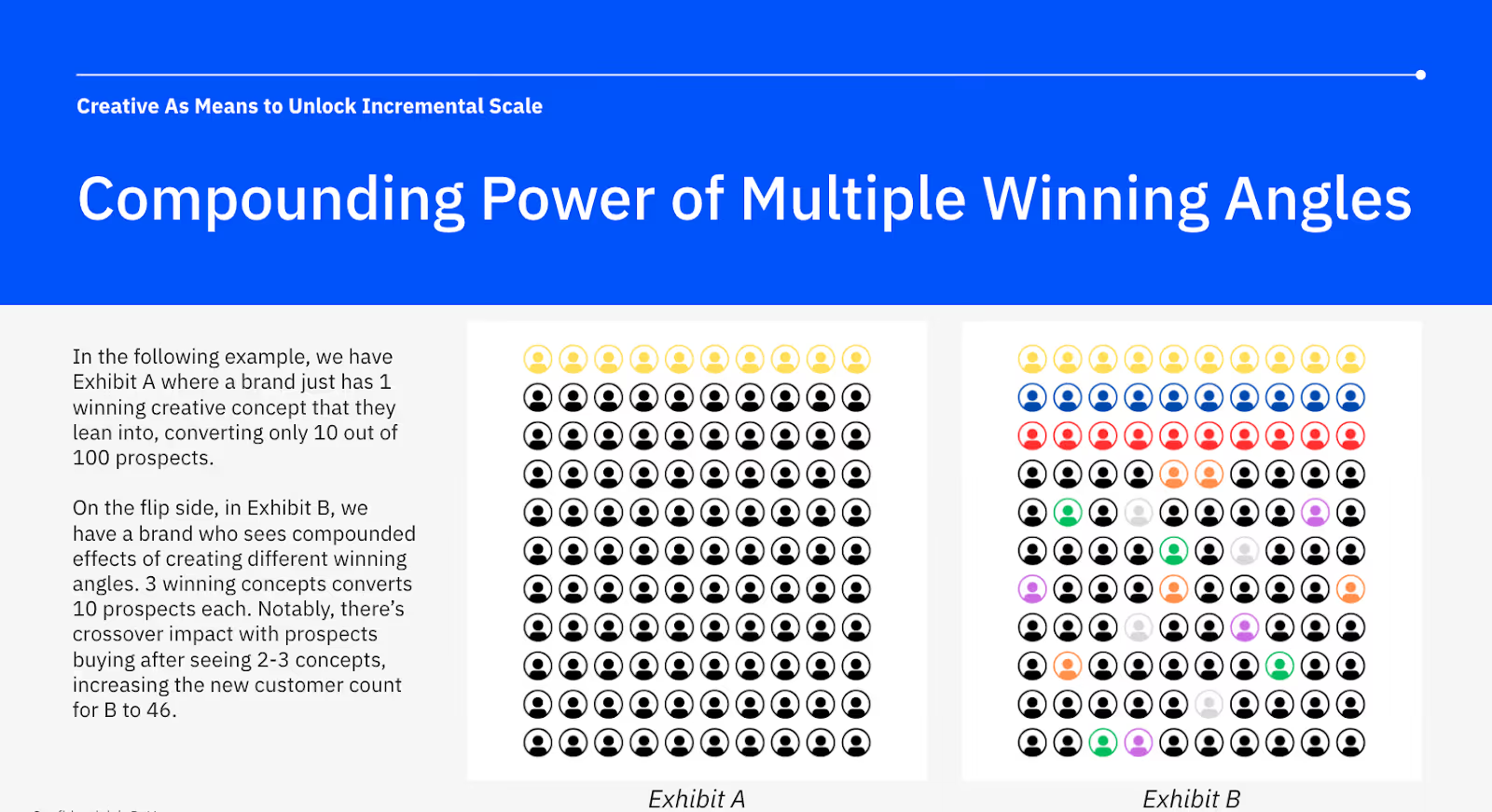
Brands are modulating their content to get a more diverse array of messages out there. Develop multiple differentiated creative concepts, break them into parts, and remix them. For instance, a voiceover from one ad can power visuals from another.
This puts multiple different messages out there that all land with different people in different ways — which compounds growth. (See the infographic below for a visual representation.)
Once you land on a few assets that work, you can test to find the interplay of assets that works for the most buyers. For instance, you can drill down on not just the selection of assets that converts the most buyers, but also the ideal order to deliver those assets in.
2️⃣ Reserve some test budget for ad creative that actively challenges your preconceptions.
Marketers are full of opinions. And while experience and good old-fashioned intuition give marketing teams a sense of what works and what doesn’t, it’s worth using testing to challenge these long-held hypotheses.
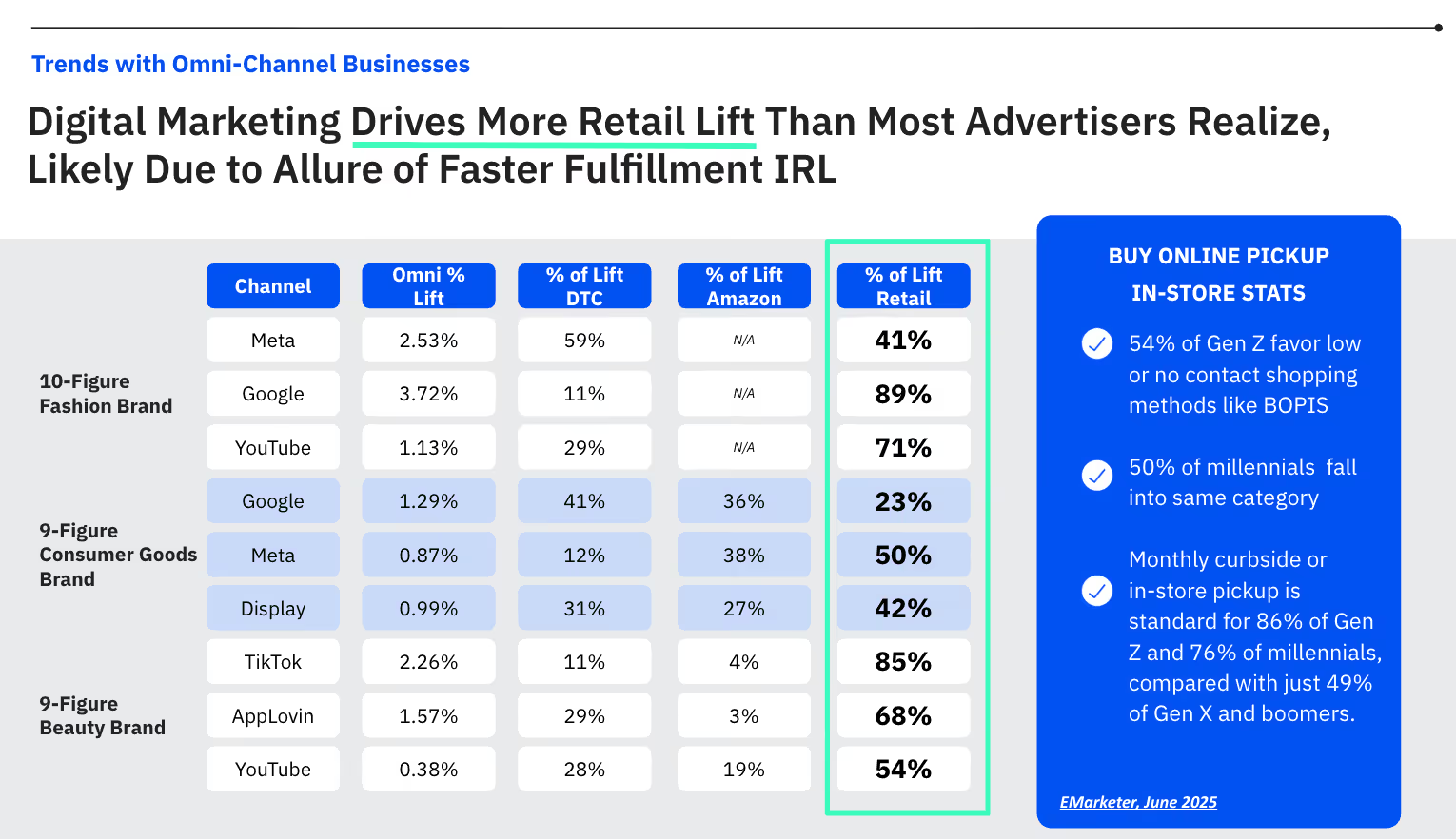
Here’s an example hypothesis: “Do ads that market how you can also buy in select retail locations (e.g Target) also increase SKU velocity on retail and DTC?”
It’s worth a test. Wholesalers selling your product can inspire confidence, which leads to higher CTR and CvR on eComm. Plus, the idea of fast/easy fulfillment can pique interest, particularly in the CPG/beauty/fashion where there’s an emotional urge to have something now. Haus tests and broader industry trends suggest there’s something to that theory.
Another example: “Are memes effective for our brand?”
“I have a hunch that marketers avoid being cheeky because it’s hard to do well, it’s subjective, and it might defy brand guidelines,” says Hoon. “I say, have your copywriter/creative team throw a few darts at the board and see what works. You may not see Duolingo-level business success but maybe you could settle for the DTC-version of the NYC Ferry account and still come out on top.”
3️⃣ If an ad isn’t working, ask if it feels native to the platform.
This isn’t a hot take. Meta, TikTok (Spark Ads), YouTube (ABCDs of creative) all agree on this in principle and mention it in their own branded creative best practice docs.
And it makes sense. It confounds the user experience to see content that’s diametrically opposed to what you usually see. It’s why you can’t necessarily launch your UGC onto YouTube and CTV and expect it to scale with you.
Plus, audiences on platforms can vary a lot. For instance, compare the audience on Facebook (skews a bit older) vs. the audience on Snapchat (skews very young). Naturally, the types of users on these platforms can vary. So you can’t expect comparable performance for the same asset across different platforms.
4️⃣ Once you have your message, use testing to ensure you’re delivering it efficiently.
“Something I’ve been pointing out to a decent number of my clients — especially those with long conversion cycles — is that their purchase-optimized campaigns are often over-indexing on very warm audiences,” says Hoon.
Hoon’s worked with customers where roughly 40% of spend — sometimes more — was going toward retargeting and retention, even though these were supposed to be pure prospecting campaigns. That’s just the nature of platforms that are trying to drive as many conversions as possible — inevitably, the system will end up spending against people who are already very close to purchasing. That usually means folks who abandoned checkout, browsed a few pages, and so on, rather than allocating more budget toward truly net-new audiences.
“A better approach, in my view, is to put the majority of budget toward prospecting, with a smaller share — say 10-15% — going to reminding people who have already shown interest: ‘Hey, we’re still here. We have great deals, beautiful designs, and so on.’”
Hoon’s approach shows that testing isn’t just about numbers on a dashboard — it’s about sharpening a brand’s voice so it resonates with the right audience. By combining a storyteller’s instinct with a data scientist’s precision, he helps Haus customers uncover not only which stories land, but why they work and how to deliver them thoughtfully.
.png)
.png)


.png)
.png)

.png)

.avif)


.avif)
.avif)

.avif)

.avif)

.avif)
.avif)
.avif)


.avif)


.avif)


.avif)
.avif)
.avif)
.avif)
.png)
.png)
.avif)


.avif)
.avif)
.avif)
.avif)
.avif)
.avif)

.avif)

.avif)
.avif)

.avif)
.avif)
.avif)
.avif)
.avif)


.avif)
.avif)

.avif)
.avif)

.avif)
.avif)
.avif)

.avif)

.avif)
.avif)
.avif)
.avif)

.avif)


.avif)
.avif)



.avif)
.avif)
.avif)

.avif)
.avif)
.avif)
.avif)
.avif)
.avif)



.png)
.avif)
.png)
.avif)