Why Enterprise Marketing Teams Stay Stuck on Bad Data (And How the Good Ones Get Out)
Most enterprise teams know their marketing data isn't good enough. Haus Enterprise Measurement Strategist Kevin Keeley knows a thing or two about where the best ones start.
Jun 2, 2026

Transforming how a global business makes marketing investment decisions is as much about operations and change management as it is measurement.
I work with enterprise businesses on their business goals, experiment roadmap, and investment decisions every day at Haus. Most enterprise teams I work with come in with low confidence. Not in their people — in their data. They know the numbers they're looking at aren't good enough. They just don't know where to start.
Last-touch and multi-touch attribution (MTA) models, originally designed as a simple proxy for the customer journey, have become the default scorecard for many executives and marketers. Even years after ATT and privacy compliance forced probabilistic extrapolation of these already-correlation-based models, they persist. Why? Because they feel actionable, the data is abundant, and for performance media, they have a dangerous habit of only telling us good news.
Flip to the upper funnel — brand, video, awareness — and the problem inverts. Last-click and MTA go nearly silent.
So where do enterprise teams turn? Often to bespoke media mix models. Grand MMMs built over months, with every prior under the sun. They become artifacts of process. The organization spent the budget on the model instead of the decision. And crucially: Nobody trusts them enough to act.
Misplaced confidence in MTA and MMM breaks marketing investments
False comfort in performance metrics that only validate. False precision in models that nobody trusts. Both lead to the same outcome: executives without reliable guardrails for investment decisions, and teams that eventually fall back to whatever metric keeps everyone in the room feeling good (or equally dissatisfied).
I see this at companies of every size. They don't know how to get to best-in-class. They're not sure what to do first. And when you're managing relationships with an external vendor and trying to build internal alignment and figure out how to communicate up to the C-suite — it's hard. So here’s what I recommend.
What best-in-class enterprise marketing measurement and decision-making looks like
The teams doing this well — think SharkNinja, Wayfair — aren't starting with a perfect model. They're starting with a shared standard for what "this is working" actually means. Not methodology for its own sake, but a common framework for evaluating evidence across the organization.
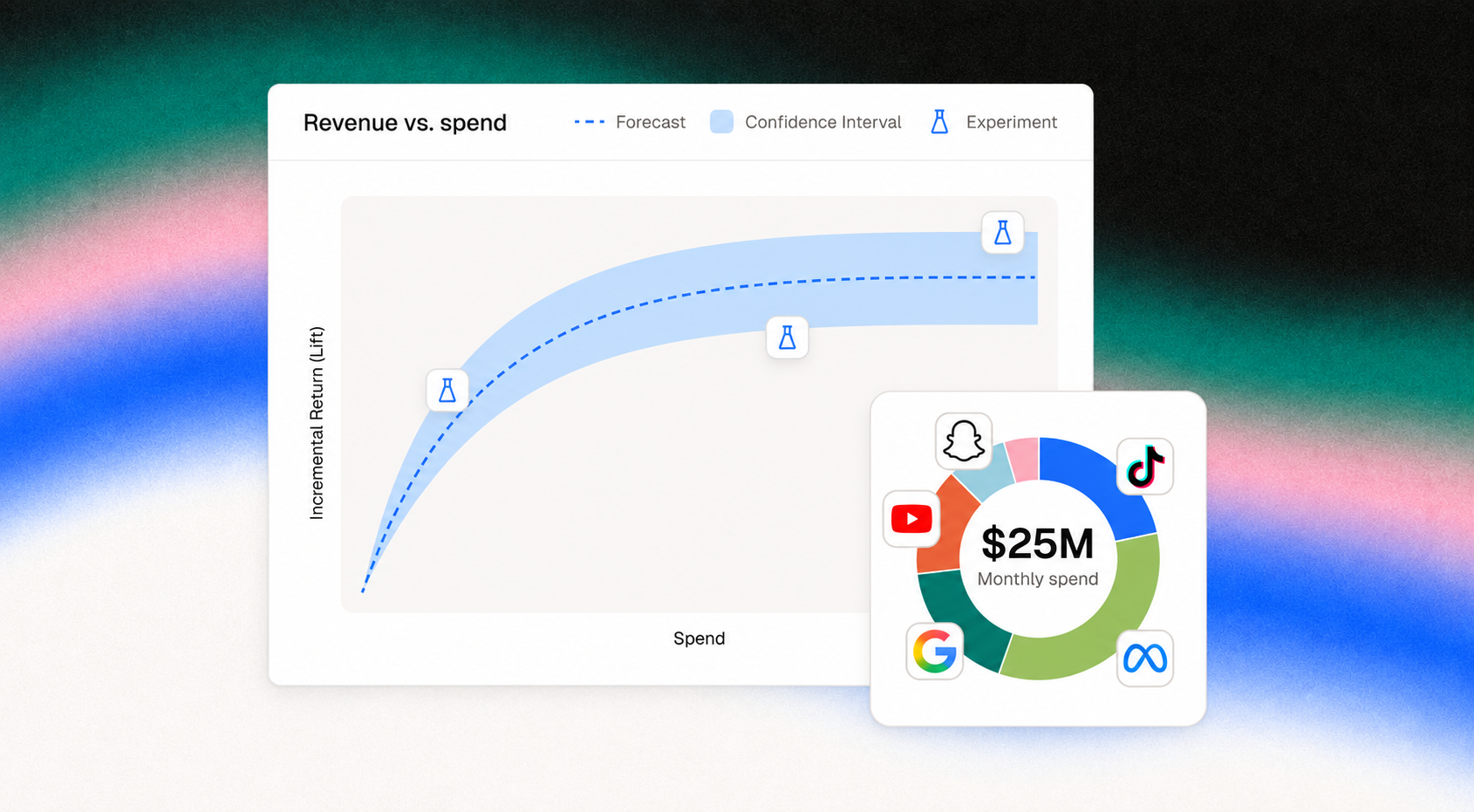
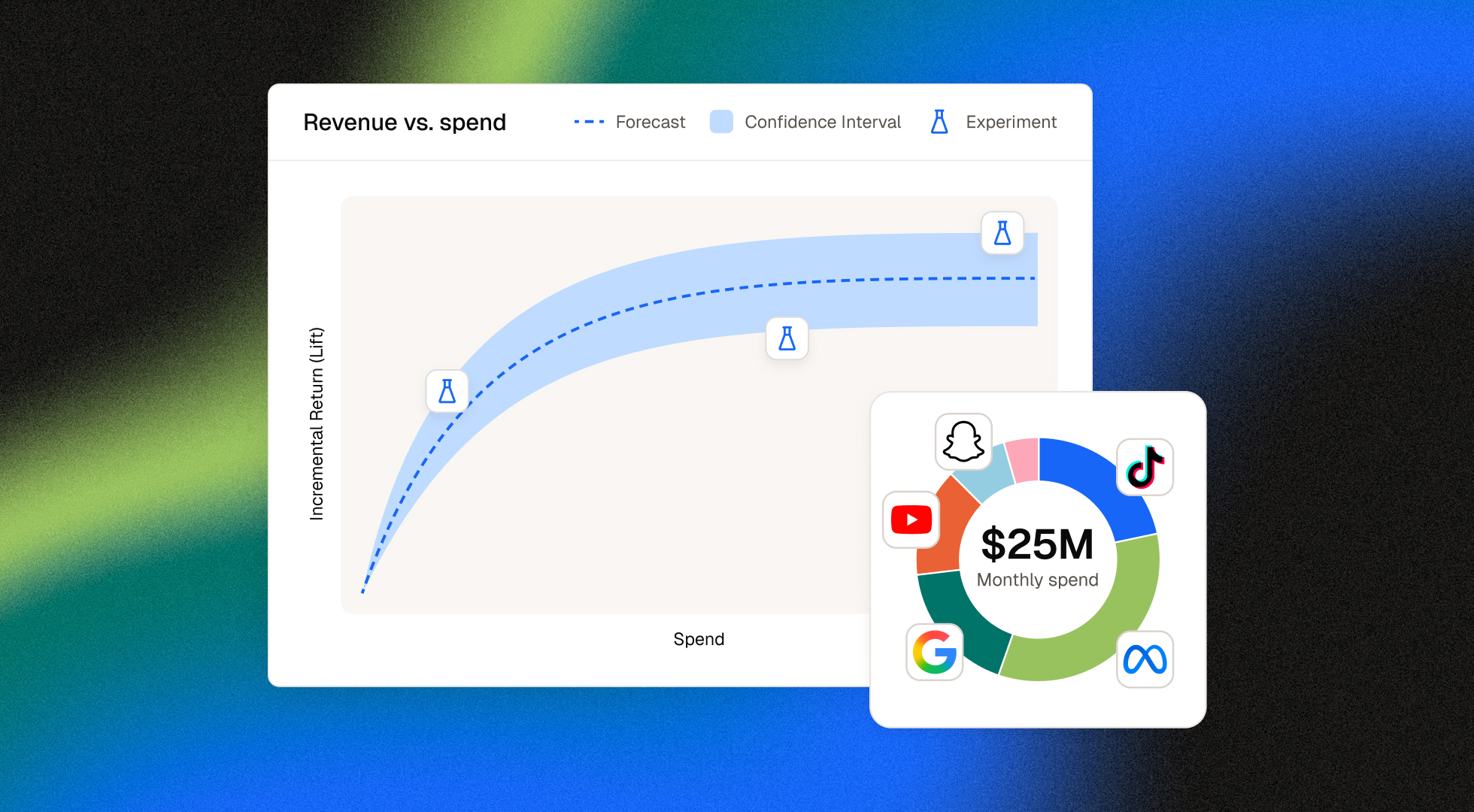
From there, the most important thing you can build is a compounding experiment library. In the most basic of terms, try explaining this to your stakeholders like this: “We turned a channel on or off and measured the difference.” It's eye-level methodology. It doesn't require blind trust in a black box.
But here's what most teams underestimate: If you don't have a lot of experience running incrementality tests, you need to build up a results library before you can confidently act on them. Ten, twelve well-designed tests. Enough that you can contextualize results against each other, understand what a meaningful lift looks like in your category, and start to feel the shape of what your marketing is actually driving across sales channels. That library becomes a strategic asset — and once you have it, you can make reallocation decisions faster, with actual evidence in the room.
The same discipline applies to MMM. Whether you're working with an external vendor or running an in-house model, the standard should be transparency: Do you know how the model works? Can you see calibrated vs. uncalibrated outputs and understand how far they stray? Can you work with them to incorporate experiment priors? A model you can interrogate is a model you can trust. A model you can trust is one your team will actually use.
(And yes: Haus has a Causal MMM that's powered by your experiment library, but we get that teams may want to stick with a homegrown solution. It's OK!)
Enterprise leaders don't need a perfect measurement system on Day One
CMOs, CFOs, and data science leaders want to see their teams getting smarter, quarter over quarter, with the investment process tightening around real signals. It probably won’t happen overnight, and that’s OK.
The hardest part isn't finding the right methodology – although yes, we have opinions about this. The hardest part is mobilizing an organization to act on evidence that challenges decisions already made. The teams that get this right don't just measure better – they make faster decisions, defend budgets more credibly, and stop losing ground to whoever tells the most convincing story with the most convenient data. They align their decisions to business outcomes.
This is an organizational advantage that compounds. It's a problem the Haus Measurement Strategy team thinks about every day. And if you're trying to figure out where to start — we’re always happy to talk. It’s not always easy, but it’s absolutely possible.
Subscribe to our newsletter
Article tags
Article authors

Kevin has over a decade of experience as a media buying and ad tech professional, specializing in a test-and-learn approach to marketing strategy. As a Haus Enterprise Measurement Strategist, he helps global enterprise businesses deploy incrementality testing programs as a strategy for marketing measurement, investment decisions, and achieving business goals. Kevin is passionate about causality in marketing and cutting through the noise.



.jpg)

.png)









.avif)
.avif)
.avif)
.avif)

.avif)
.avif)
.avif)


.avif)


.avif)

.avif)
.avif)
.avif)
.avif)
.png)
.png)
.avif)


.avif)
.avif)
.avif)
.avif)
.avif)
.avif)

.avif)

.avif)

.avif)

.avif)
.avif)
.avif)
.avif)
.avif)


.avif)
.avif)

.avif)
.avif)

.avif)
.avif)
.avif)

.avif)

.avif)
.avif)
.avif)
.avif)

.avif)


.png)
.avif)



.avif)
.avif)
.avif)

.avif)
.avif)
.avif)
.avif)
.avif)
.avif)