What is an enterprise incrementality platform?
Every marketing team is running the same race: spend is growing, channels are multiplying, and the finance team wants to know whether any of it is actually working.
May 28, 2026

Every marketing team is running the same race: spend is growing, channels are multiplying, and the finance team wants to know whether any of it is actually working. Traditional attribution tells you clicks and conversions. Traditional marketing mix modeling (MMM) tells you correlations. Neither tells you what would have happened if you hadn't spent the money at all.
That's the question incrementality answers. And for enterprise marketers — teams managing complex portfolios, multiple geographies, and nine-figure media budgets — the stakes of getting it wrong are enormous.
An enterprise incrementality platform is purpose-built software that helps large marketing organizations run geo-based experiments at scale: Designing tests, managing holdout groups, analyzing results, and connecting those results to business outcomes across channels. The word "enterprise" matters here. The requirements of a company like Wayfair or SharkNinja — running dozens of tests simultaneously across multiple product lines, geographies, and sales channels — are categorically different from what a smaller D2C brand needs to figure out whether Meta is working.
Why experimentation at enterprise scale requires a platform
The foundational logic of incrementality testing is simple: Divide geography into a test group (exposed to ads) and a holdout group (not exposed), then compare outcomes. The only way to confirm your marketing is driving growth is to run an experiment with a holdout.
What makes this hard at enterprise scale is everything that surrounds that core idea.
Wayfair's measurement team, for example, had already built significant in-house tooling for experiment design and geo-level testing. But as Faith Shin, who leads measurement attribution science at Wayfair, has described, the team found a mismatch between where they were spending effort and where they could create the most value. A growing share of the work involved operational execution — setting up tests, working with platforms on requirements, managing QA, doing midterm and final reads. Unless they wanted to continually dedicate science time to tactical work, something had to give.
This is the enterprise problem in miniature: The work required to run experiments properly competes with the higher-order work of translating results into decisions and improving methodology over time.
Joe Wyer, Haus' chief scientist and formerly a marketing measurement leader at Amazon, has described the in-house version of this failure mode clearly. Even at a company with Amazon's resources, getting engineers fast enough to automate and systematize measurement work was nearly impossible. The result: analysts stuck doing forensic work instead of building insights, learnings rotting away in shared drives, and employee burnout so severe that tenures on the team averaged about a year. Without the resources to systematize, results don't compound — and you can't build on what you can't find.
A dedicated platform solves this. Pre-validated methods, automated QA, proven integrations, and workflows built specifically for experimentation mean teams can start learning and reallocating budget in days rather than months.
What separates enterprise-grade from basic incrementality tooling
Not every incrementality tool is built for enterprise complexity. A few things matter at scale that don't matter at smaller volumes.
Synthetic controls, not matched markets. Matched market tests compare one geographic area directly to another — which means inherent differences between markets introduce variables that can skew results. Synthetic controls instead combine data from multiple untreated markets to build a composite that mathematically mirrors the test market. This approach is more accurate, and at enterprise scale, where the cost of a wrong decision is measured in millions, accuracy is not optional.
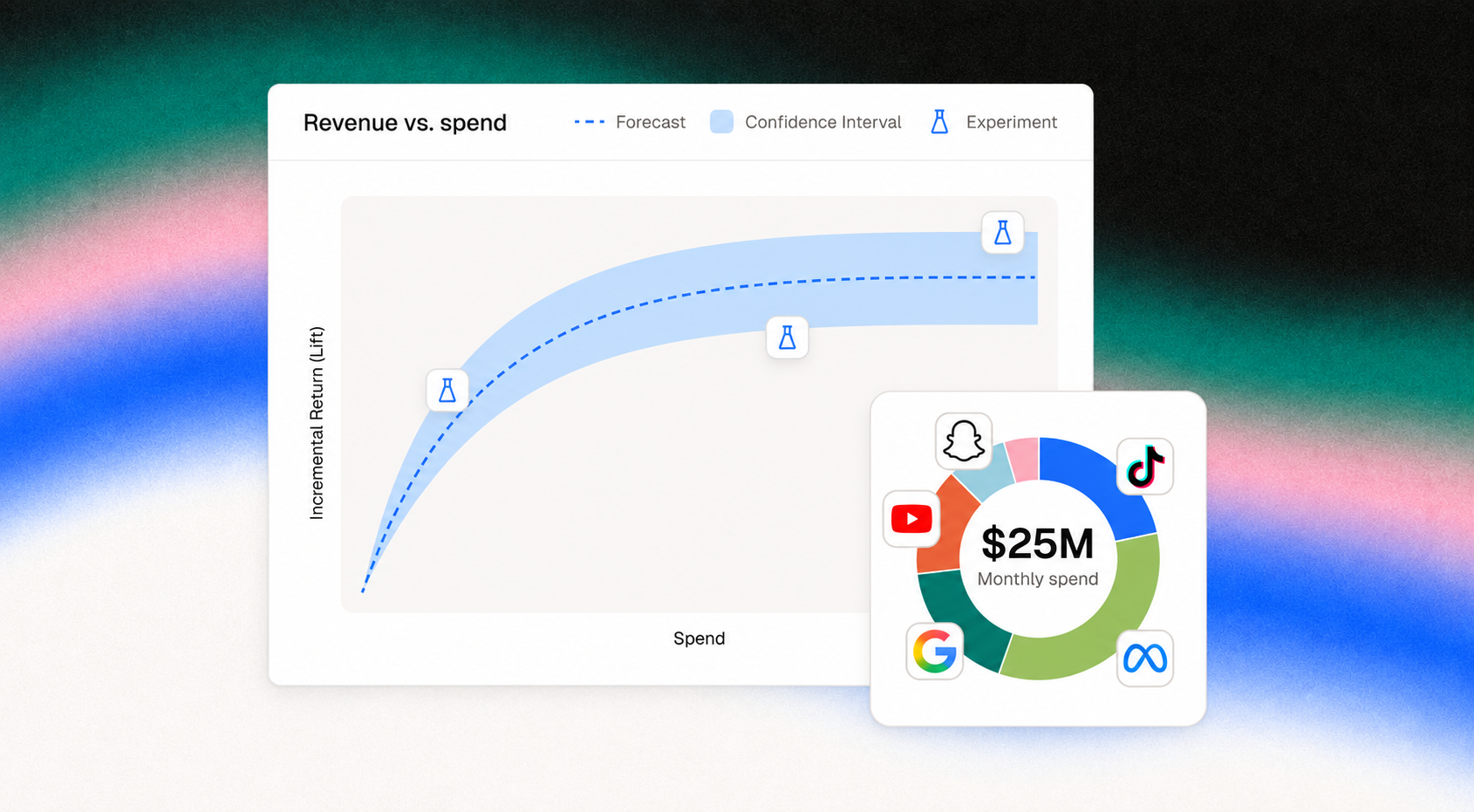
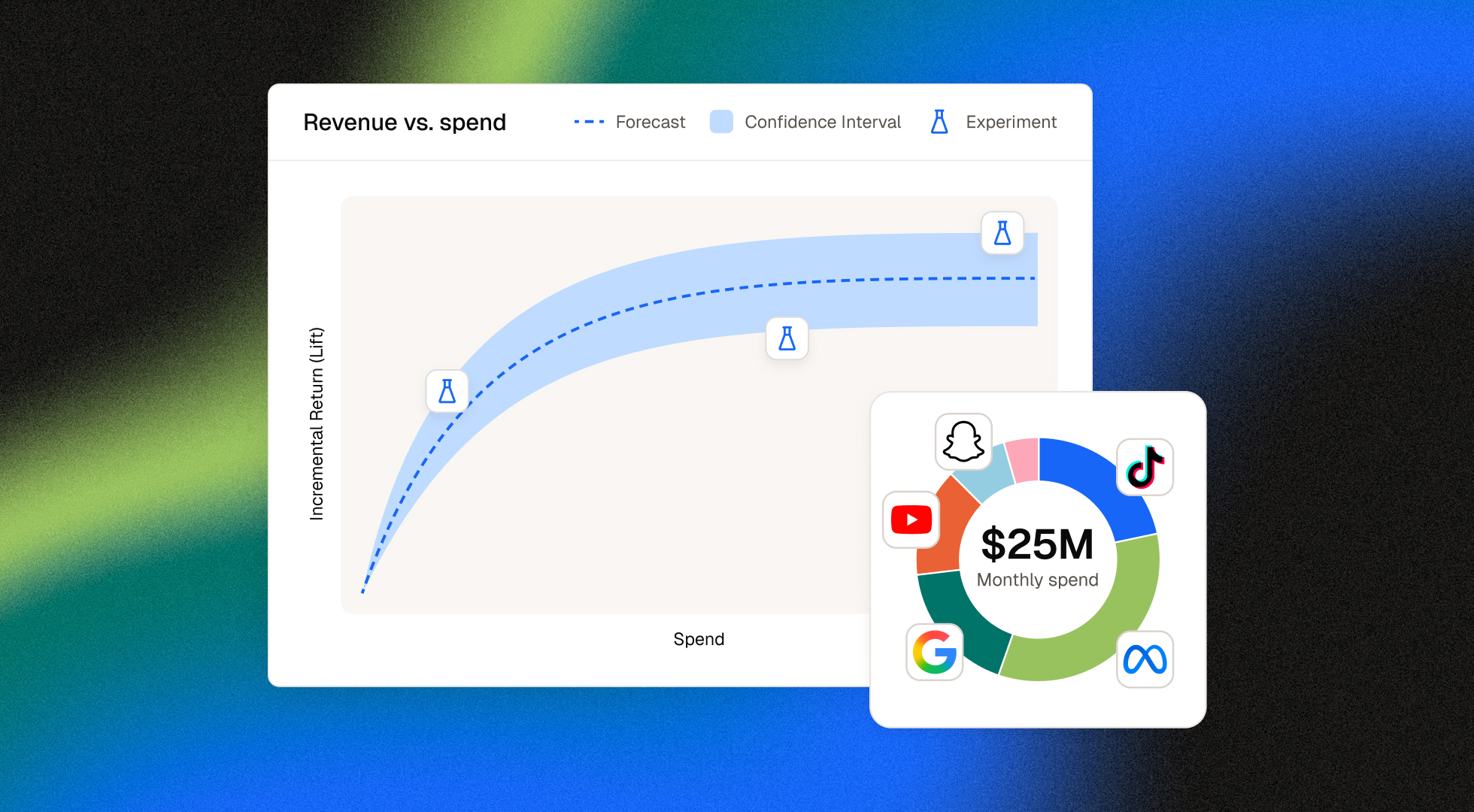
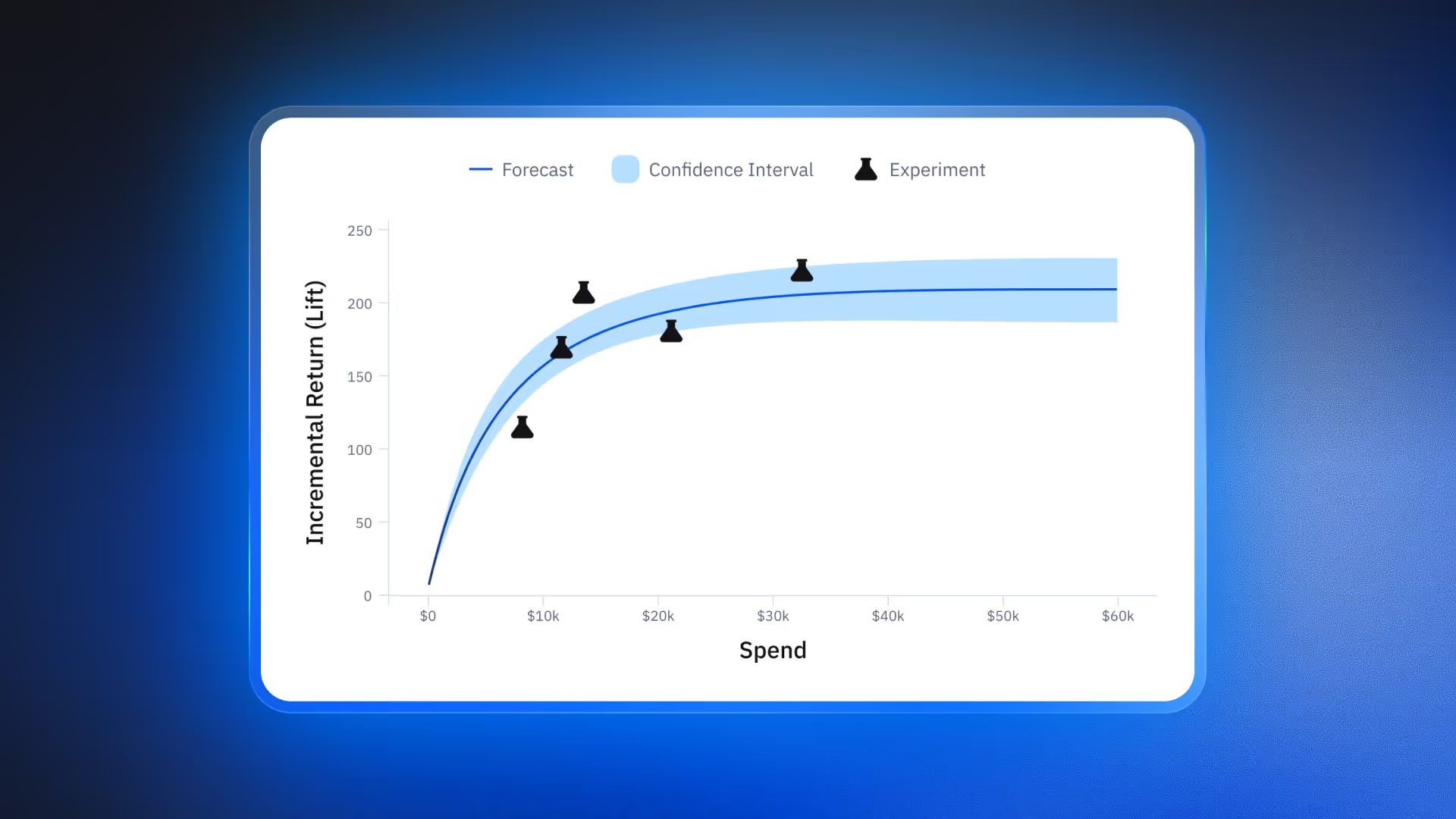
Multi-cell experiment design. Standard 2-cell tests (test group vs. holdout) answer whether a channel is incremental. But enterprise teams often need to answer harder questions: Is this channel incremental at current spend levels? What happens if we double spend? 3-cell tests — which include a holdout and two test groups — can yield powerful insights about diminishing returns and spend efficiency. Wayfair's team moved from conservative 50/50 designs toward multi-cell structures, which increased testing velocity and enabled more creative experiment design.
Omnichannel KPI tracking. For enterprise brands that sell through D2C, Amazon, retail, and emerging channels like TikTok Shop, a test that only measures .com outcomes is incomplete. The key is being able to see not just whether a channel was incremental, but where the impact showed up — in retail, on Amazon, on the brand's own site. If you only pass .com data into a test, you risk mistaking channel shift for true lift. Newton Baby's experience bears this out — omnichannel data changes what you learn.
Privacy durability. Enterprise measurement needs to work regardless of how the privacy landscape evolves. Incrementality testing should be rooted in data you already have easily accessible: App downloads, revenue, orders.
Rigorous placebo testing. Before any experiment launches, a reliable platform runs simulations on historical data to validate that the experiment design wouldn't falsely detect a lift. This kind of automated QA is impractical to do at scale by hand — which is part of why in-house builds tend to struggle.
How enterprise teams actually use an incrementality platform
Wayfair and SharkNinja illustrate two different but compatible approaches to enterprise measurement.
Wayfair operates what Shin calls a "constellation of inputs" — multi-touch attribution (MTA) for granular channel performance, MMM for portfolio-level budget allocation, and geo-based incrementality testing as the causal ground truth that validates and calibrates both. The platform's role is to increase the velocity and scalability of the testing program without requiring science team time on operational execution. Freeing up that operational load gives the team room to focus on methodology development and deeper analysis — understanding how efficiency differs by customer type, forming and testing hypotheses about results.
SharkNinja's approach leans into the breadth of their product portfolio. Because advertising for one SharkNinja product line is unlikely to drive significant halo effects into an entirely different product category, they can run multiple tests simultaneously across product lines and geographies without worrying about contamination. The goal: Run as many tests as possible — not just to generate individual results, but to build a corpus of experiment data large enough that AI can surface priors when a new question comes up. When you're launching a product in a new market through a new channel, you may not have run that exact test before, but enough adjacent tests means you're not starting from zero.
That compounding effect — learnings that build on each other over time — is what separates a mature enterprise measurement program from a collection of one-off tests. It's also what in-house builds, without the resources to properly systematize and preserve results, tend to lose.
The make-vs-buy question
For enterprise data science teams with strong statistical backgrounds, building measurement tooling in-house can look attractive. The flexibility is real: When you control every piece of the puzzle, you can move quickly on custom analyses.
But the operational costs compound. Homegrown tools require continuous upkeep as APIs change, privacy rules evolve, and statistical models need tuning. What starts as a project becomes a recurring engineering commitment. Methodology risks accumulate — incrementality testing is sensitive to design flaws like randomization issues, bias, and mis-specified models. And learnings don't automatically compound; they require systematic infrastructure to preserve and build on.
The enterprise teams that move fastest on measurement tend to make a clear division of labor: Internal science teams own methodology development and decision-making, while a dedicated platform handles operational execution, experiment infrastructure, and QA.
For teams still evaluating options, the Haus guide to choosing an incrementality platform covers the key criteria in depth. And for a primer on the underlying measurement concepts, Incrementality 101 is a good starting point before any vendor evaluation.
The core question incrementality answers — does this spending actually cause growth? — doesn't change at enterprise scale. But the infrastructure required to answer it reliably, repeatedly, and fast enough to matter absolutely does.


.jpg)

.png)









.avif)
.avif)

.avif)
.avif)

.avif)
.avif)
.avif)


.avif)


.avif)

.avif)
.avif)
.avif)
.avif)
.png)
.png)
.avif)


.avif)
.avif)
.avif)
.avif)
.avif)
.avif)

.avif)

.avif)

.avif)

.avif)
.avif)
.avif)
.avif)
.avif)


.avif)
.avif)
.avif)
.avif)

.avif)
.avif)
.avif)

.avif)

.avif)
.avif)
.avif)
.avif)


.avif)


.png)
.avif)



.avif)
.avif)
.avif)

.avif)
.avif)
.avif)
.avif)
.avif)
.avif)