Measuring Big Brand Moments With Time Tests
Now live in the Haus app, Time Tests estimate the incremental impact of a significant change to your business when test and control groups aren’t feasible.
Dec 15, 2025
.png)
A Super Bowl spot. An Olympic sponsorship. A product collab with a cultural icon. A buzzy, everywhere‑you‑look influencer campaign.
These are the big, shiny, high‑stakes moments marketers live for — moments that can define a brand’s year. They’re designed to build brand equity, spark awareness, nudge consumers into consideration, and (hopefully!) bring in customers. The tough part comes after the confetti: measuring the true business impact.
In practice, teams often lean on fuzzier metrics like reach, impressions, engagement, and brand survey results (i.e., awareness, consideration, ad recall). Those are useful signals. But when you’re updating executives (hi, CFO) and deciding where the next dollar goes, you need a more credible bridge from cultural moment to measurable growth. That’s why we developed Time Tests — a fast, data‑driven way to gauge impact when you can’t run a holdout test.
What is a Time Test?
A Time Test estimates the incremental impact of a single, significant change to your business when clean test and control groups aren’t feasible. Think linear TV commercials (like Phoenix’s Superbowl Spot), celebrity collabs, or nationwide sponsorships — activities that hit everywhere at once.
Once you’ve identified which campaign or activation you want to measure, start with a clearly defined observation window: launch and end dates, any pre‑launch ramp, and any post‑campaign tail you want to observe. Then choose a stable KPI — revenue, orders, new customers — one with enough historical signal to learn from. The more context your history includes (seasonality, holidays, etc.), the better your forecast.
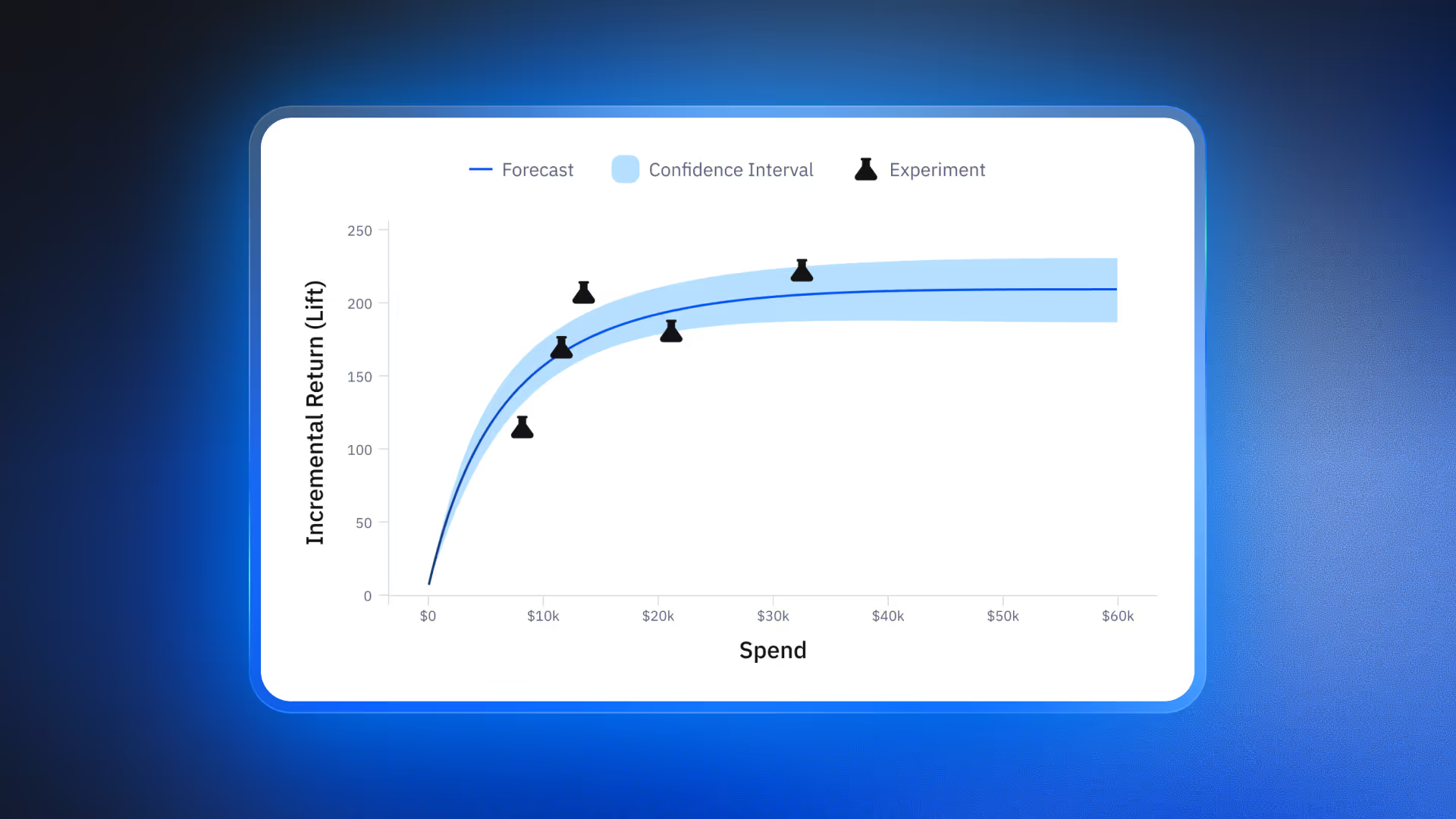
After you launch your experiment, we use forecasting models to build a counterfactual — a precise, data‑driven view of what would have happened without the campaign. We compare that forecast to actual performance during your campaign window. The gap between the two is your incremental lift.
In plain English: Time Tests translate cultural buzz into business impact so you can speak the same language as your Finance friends.
How are Time Tests different from other Haus experiments?
Haus offers several different types of experiments, and the right tool depends on what you’re trying to measure and your experiment design constraints.
GeoLift Tests are the gold standard when you can randomly split a country into distinct test and control groups (e.g., Meta, Google, TikTok). You get the most precise read with true holdouts.
Fixed Geo Tests are useful when you already have predetermined test and control regions (out‑of‑home, local activations) and still want a credible causal read.
Time Tests are best for national, high‑impact campaigns when you cannot split your marketing into test and control groups. They’re more directional and work best when a big enough change — during an otherwise business‑as‑usual period — can plausibly move top‑line metrics beyond normal noise.
Demonstrate the ROI of your activation
Big brand investments shouldn’t be judged by fuzzy metrics or vibes alone. With Time Tests, you can connect cultural relevance to causal business results — translating attention into stakeholder‑ready impact and showing the value of your activation with confidence.
.png)
.png)


.png)
.png)
.png)
.avif)


.avif)
.avif)

.avif)
.avif)
.avif)
.avif)
.avif)


.avif)

.avif)

.avif)
.avif)
.avif)
.avif)
.png)
.avif)

.avif)
.avif)
.avif)
.avif)
.avif)
.avif)

.avif)

.avif)

.avif)

.avif)
.avif)
.avif)
.avif)
.avif)

.avif)
.avif)
.avif)
.avif)

.avif)
.avif)
.avif)

.avif)

.avif)
.avif)
.avif)
.avif)

.avif)


.avif)
.avif)



.avif)
.avif)
.avif)
.avif)
.avif)
.avif)
.avif)
.avif)
.avif)
.png)
.avif)
.png)
.avif)