Can An AI Agent Make Budget Decisions You’d Bet Your Business On?
Marketers have long made billion-dollar budget calls on incomplete data. Architect is built to change that.
Jun 3, 2026
.avif)
Haus is launching a new AI-supercharged causal media optimization system called Architect – and I’d like to tell you a bit about it.
Some of you may know parts of my story: As a data scientist and product manager at Google, I saw how incrementality testing could make budgets dramatically more efficient. Why were businesses making consequential marketing decisions based on bad, correlational data from last-click, multi-touch attribution, or platform reporting when there was such a better alternative? (I ask this rhetorically, but the answer lies somewhere in between “incrementality testing is hard to do well” and “incrementality testing is hard to scale.”)
You know what happened from there: I founded Haus, and over the years, we’ve successfully scaled incrementality testing as a platform. Here’s what you may not know, though: That was never – ever – our end-game.
There’s a trillion dollars in ad spend globally. It’s one thing to run the experiments, get the data, understand what’s driving or not driving the business. But then what? How do you know what to do with the learnings, how to act on the data, how to implement the right budget decisions across your paid media portfolio so you actually realize business outcomes at scale?
What if you could reduce the friction from insight to action down to zero? That’s Architect.
Marketers have a tough job: Changing human behavior
Life is noisy. Enterprise marketers are often spending billions or hundreds of millions of dollars, and there’s an expectation that they can account for the return of that capital with… pretty awful data.
Digital marketing brought the promise of perfect attribution from dollar invested to dollar made, but that’s just not how it works. And what about marketing that’s not digital?
Marketers of all flavors wrestle with multi-tab spreadsheets full of MMM, attribution, experimental, and survey data that don't agree with each other. There’s seasonal shifts, varying brand equities, the news cycle, economic headwinds and tailwinds. The job of a marketer resists simple analysis, and most budgets are – unfortunately but commonly – allocated on inertia and incomplete, correlational data.
Bad data + decisions based on bad data = bad (or suboptimal) business outcomes.
Can AI automate media mix decisioning?
I’ve thought for a long time about autonomous systems that exist in other industries. Take finance, for example. Think about financial portfolio management – there are established, automated tools for optimizing outcomes that don’t exist in the marketing domain.
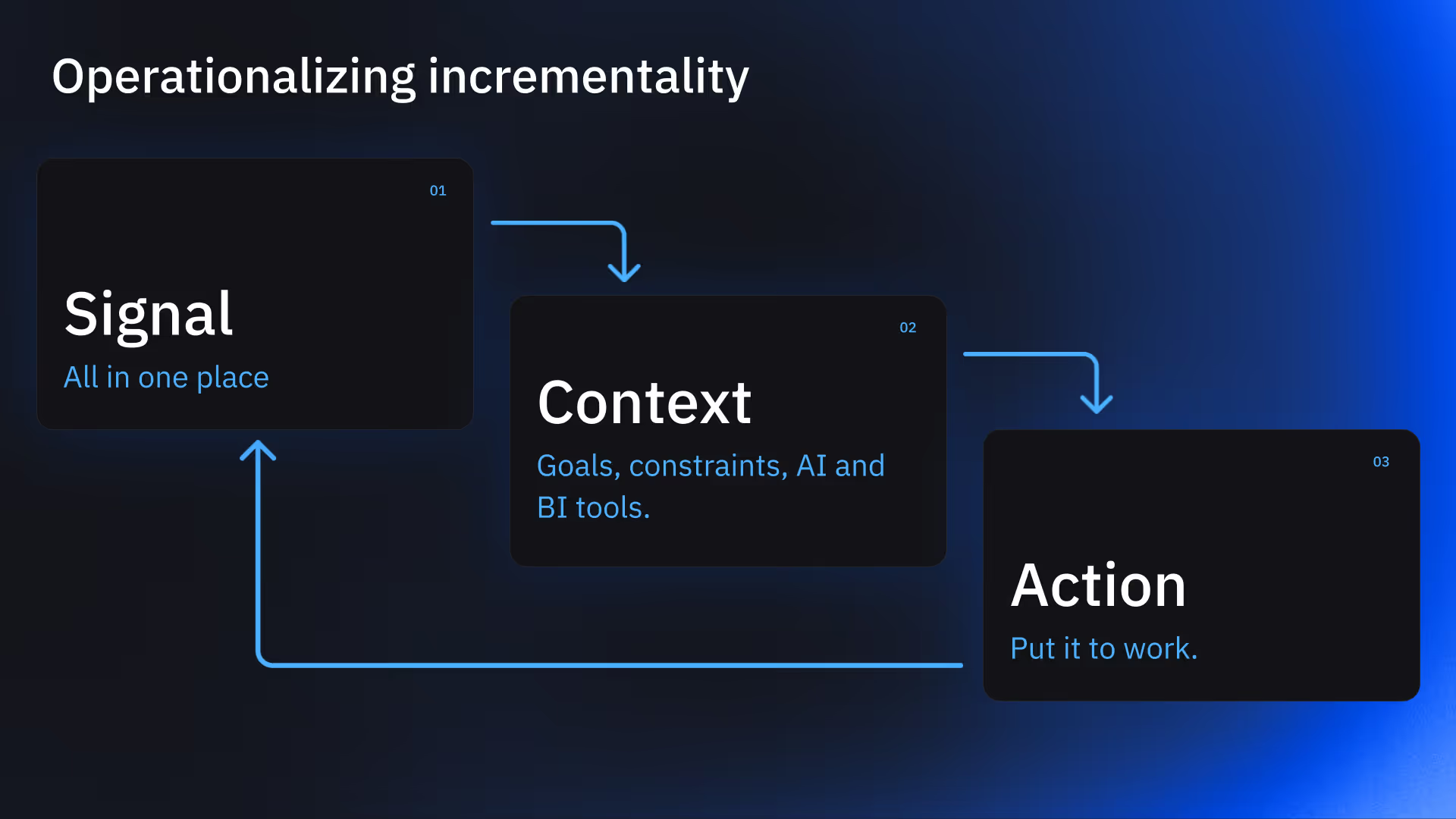
To bring a system like Architect into the marketing world and solve this problem, a few things need to exist – namely, causal data. And how do you get causal data? Incrementality tests. Incrementality reveals the closest thing to truth we can get in marketing, and that’s where Haus is rooted. Over the years, we’ve learned so much about advertising platforms, campaigns, tactics, company verticals, industries, geographies, what works, what doesn’t – we’ve amassed an extraordinary catalog of context and intelligence that can inform an AI system.
Maybe you’ve seen our research reports – maybe you haven’t (that’s OK). From the data sets we’ve analyzed, we know things like:
- YouTube underreports impact by about 3.4x
- 25% of upper-funnel lift comes after marketing campaigns end
- ~32% of Meta’s incremental impact goes to non-DTC channels
This kind of context isn’t available through off-the-shelf LLMs. Causal data is probably the most scarce resource in marketing – there’s no shortcut to it – and Haus sits in an extraordinarily unique position to customize and automate outcomes at scale because of the causal data accrued through incrementality tests.
Causal data meets predictive incrementality and automated, credible action
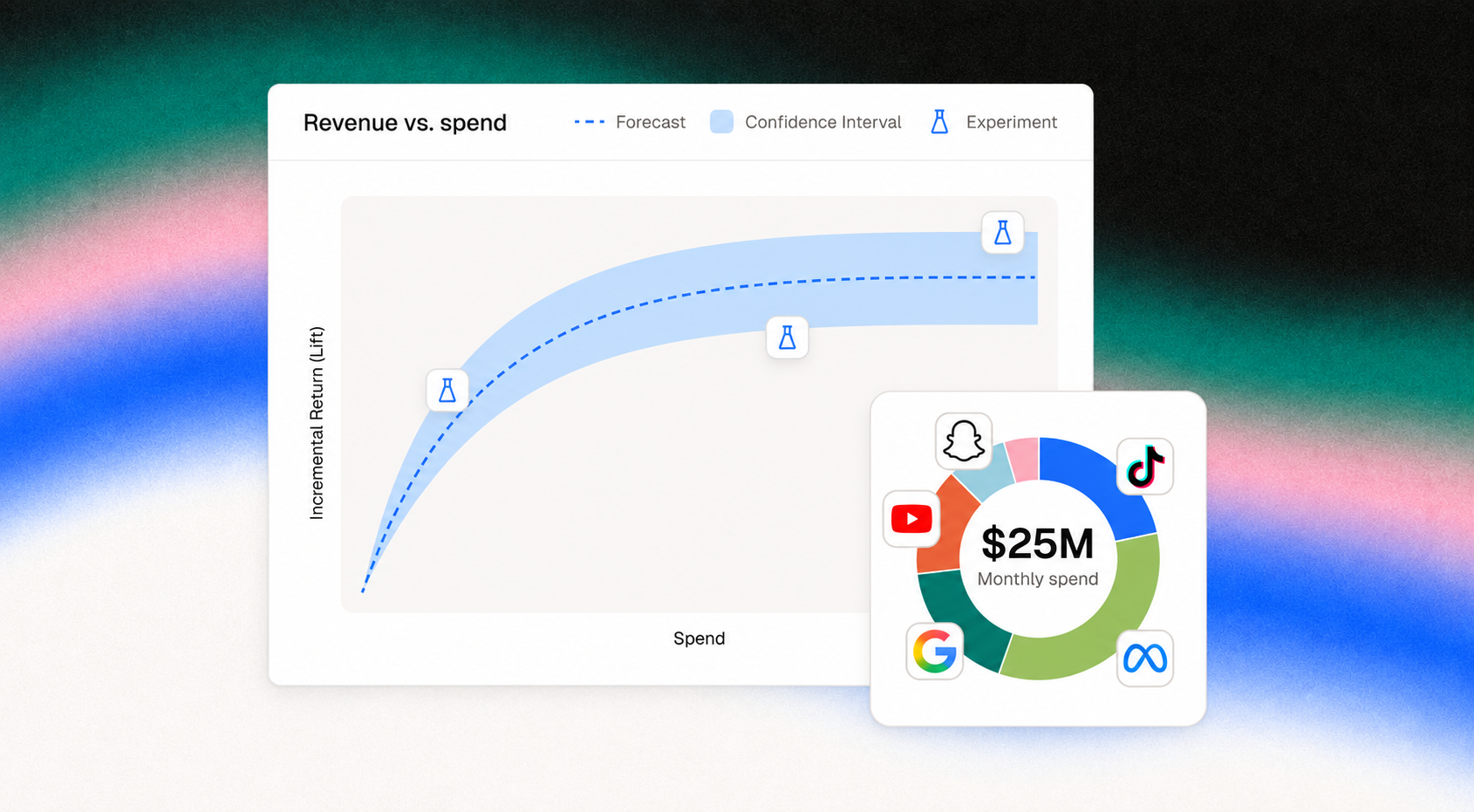
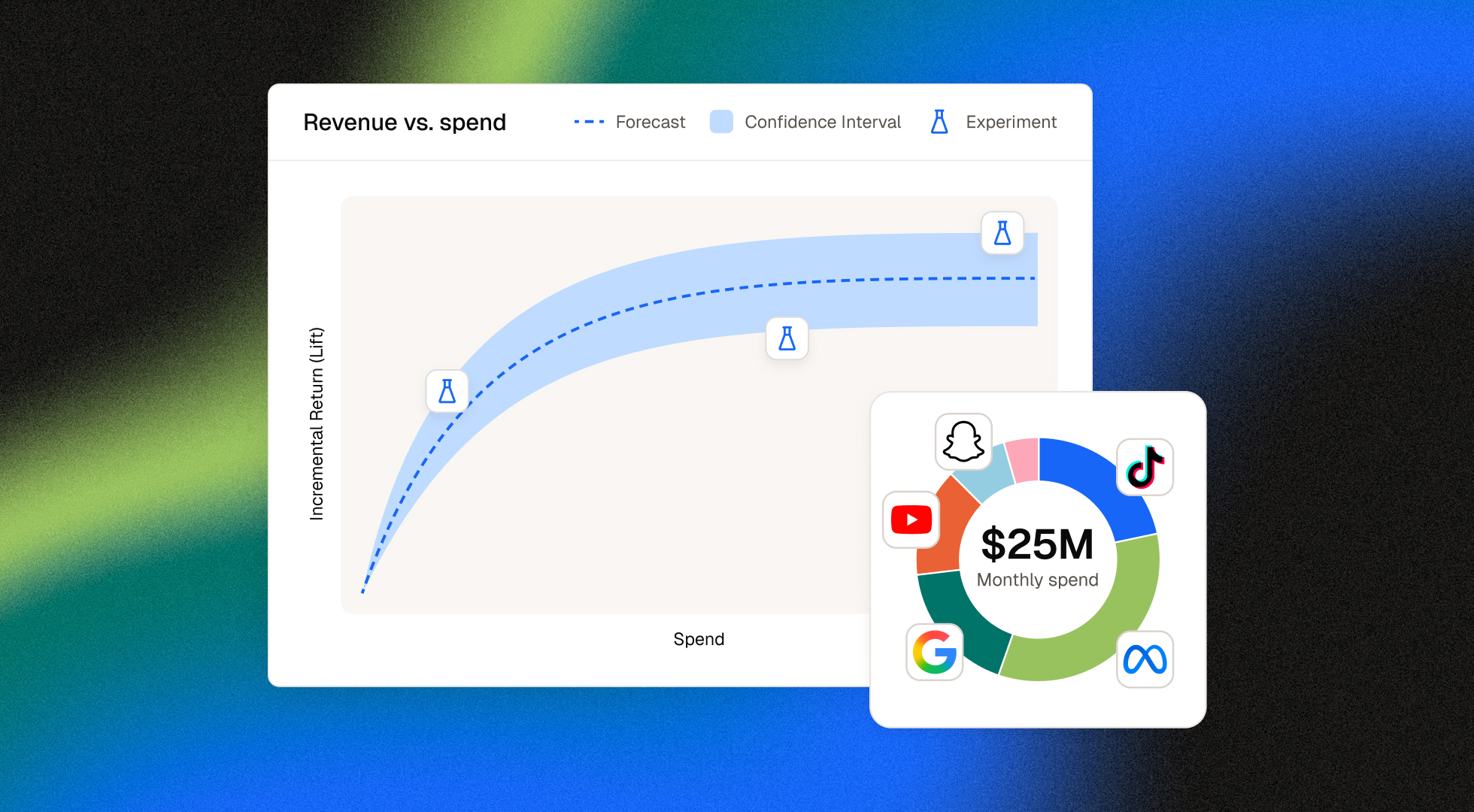
Architect is a set of superpowers informed by causal data that brings lightning-fast decisions to marketing portfolios while keeping marketers firmly in control. Marketers have keen instincts built on years of experience and institutional awareness – they know their business, they know their industry, they know their audience.
Architect is a system that we’ve built to be:
- Causal: Grounded in real-world experiments (have we beat the “causal” drum enough yet?)
- Full-context: Adaptable to promotions, constraints, and business cycles
- Agentic: Continuously able to find new opportunities to keep your dollars working maximally 24/7
- Safe and explainable: Rigorous oversight you can stand behind with every recommendation traced back to a crystal clear “why.”
.avif)
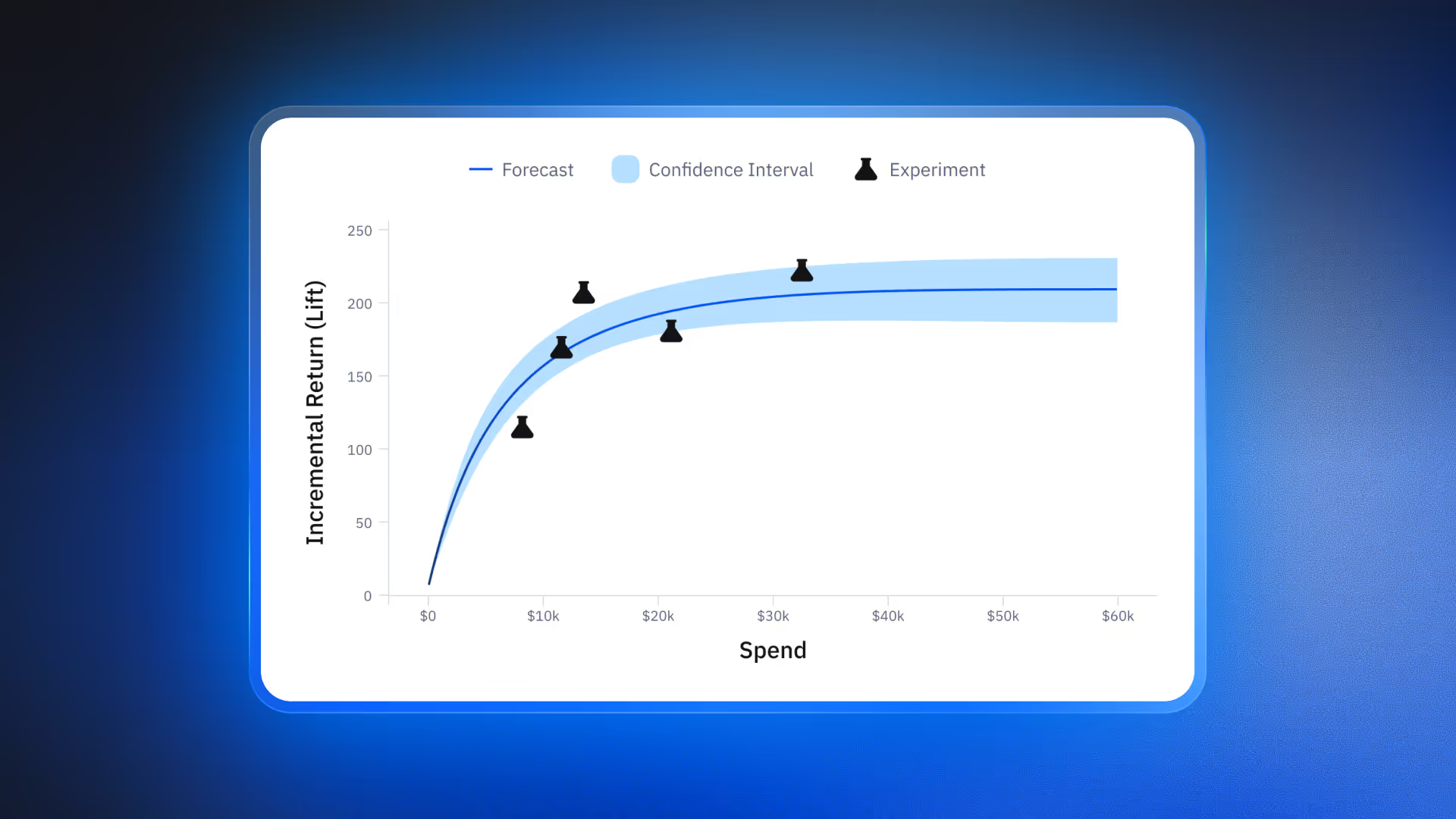
For both online and offline media, Architect recommends the next best action across channels, campaigns, and ads. It’s not one-size-fits-all: Architect is tailored based on your incrementality tests and data, and flexible enough to adapt to the messy realities of real-life. It’s self-evaluating, self-improving, and wholly integrated with the larger Haus measurement platform.
In other words, Architect wrangles all the causal data and context out there plus AI and traditional modeling into a single operating system that enables you to put data into action – quickly.
(You knew I’d bring it back to where we started: Turning insight into action.)

There’s so much more I want to say about Architect and the economic opportunities this unlocks for businesses, but for now, I’ll wrap it up. I’m excited. The team’s excited. Our customers are excited. And if you weren’t able to catch Olivia, Greg, and myself debuting Architect in Los Angeles or New York in May 2026, I encourage you to check out our recent Open Haus episode where we dive into all the goodness.
This is what we’ve been building towards since Day One – and we’ve got a lot left in the tank.
Subscribe to our newsletter
Article tags
Article authors

Zach Epstein is the founder and CEO of Haus, the AI-driven causal marketing platform enterprises use to make smarter decisions. Before founding Haus, he spent 7 years at Google as a data scientist and product manager leading advanced analytics, experimentation, and marketing science use cases.
Zach lives in the Bay Area with his wife and two daughters. He enjoys spending time on the green every moment he can.



.jpg)
.png)









.avif)

.avif)
.avif)
.avif)
.avif)
.avif)


.avif)

.avif)


.avif)
.avif)
.avif)
.avif)
.png)
.png)
.avif)


.avif)
.avif)
.avif)
.avif)
.avif)
.avif)

.avif)

.avif)

.avif)

.avif)
.avif)
.avif)
.avif)
.avif)


.avif)
.avif)
.avif)
.avif)

.avif)
.avif)
.avif)

.avif)

.avif)
.avif)
.avif)
.avif)

.avif)


.png)
.avif)



.avif)
.avif)
.avif)

.avif)
.avif)
.avif)
.avif)
.avif)
.avif)